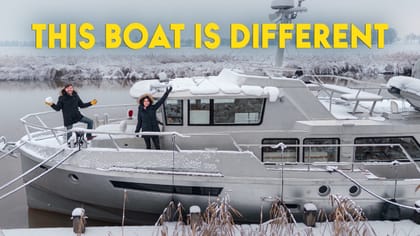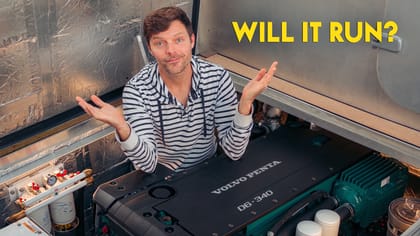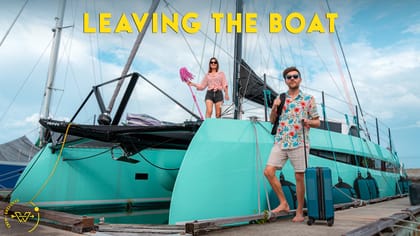
We bought UNDRA (OON-drah) at auction. No survey, no sea trial. And there was one thing we couldn’t stop thinking about… the electrical system. More specifically, stray current (hello PTSD).
It’s the invisible killer of boats. It doesn’t care how new your wiring is, how expensive your systems are, or how confident your installer was. If it’s there, it can quietly destroy props, shafts, rudders, deck fittings, bottom paint and more. And it happens far faster than most people realize.
This time, we’re not taking any chances. We brought in the corrosion expert from Marine Protection Systems to run a full inspection and teach us what we should have known years ago… and we filmed every second of it.
This video dives deep into one of the most important (and most overlooked) parts of boat ownership: Galvanic corrosion, stray current, anodes, shore power protection, and how it all actually works.
The wild part? The tests themselves are surprisingly simple but so rarely done. Or, only done once it's visibly clear there is a problem!
So, whether you’re floating on aluminum, fiberglass, carbon, wood, or anything in between, there’s something in here for you. Our new friends Jess and Brian have a rare gift for turning complicated science into plain English, and we’re so grateful they walked us through it. And let us share with you.
🔥Hot Takes
The tests are simple...either your numbers are where they should be or they are not. If they are not, that's when you call in a corrosion expert like Jess and Brian to help you track down the culprit.
We fully understand some of you are not boaters and have zero interest in this type of video. But for those of you who are, we would love to know what you thought of this episode. Do you find these deep dives interesting? Did you understand all of it, some of it, none of it? Your feedback helps us know if we nailed it or need to dial it in.
Resources and Tools (not sponsored)
Free Downloadable Guides
Want to go deeper? MPS offers a whole library of free downloadable guides. From choosing the right anodes to understanding shore power connections: marineprosystems.com/resources
If you suspect you have an issue and want to hire MPS to survey your vessel, contact them through their website. They travel all around the world and work on private and commercial ships from cruiser size to giant gigayachts. As Jess mentioned in the video, they do lots of free education as well. We met them at the METS show in 2024 and 2025, but they speak at other shows too.
Multimeter For Testing:
- Fluke (the one I have but it's overkill): amzn.to/4qNX20M
- Klein Tools (a more affordable option): amzn.to/4rBfafK
- Uni-T High Resolution for Low Voltage: amzn.to/3OlYD0C
Silver Reference Electrode
The best way to test anodes, bonding, look for stray and circulating currents on your boat. Often called a CRE (corrosion reference electrode) below are the two versions we've owned.
- MPS: bit.ly/MPS-CRE
- BoatZincs: bit.ly/BZ-CRE
Anodes
Better Than Zinc Anodes for Fiberglass, Carbon Fiber and Wood: marineprosystems.com/maddox
Isolation Transformer
"The gold standard for protection" as Jess said. It's a must have for yachts that plug into shore power, especially at a marina. On our yacht UNDRA, we have the Mastervolt Mass GI 7.0 installed.