Sailing across a giant and seemingly endless stretch of ocean is an adventure like no other! BUT it comes with a fair set of risks. Even the saltiest of sailors with impeccable seamanship can find themselves in a unfortunate situation.
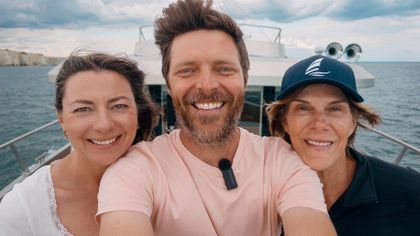
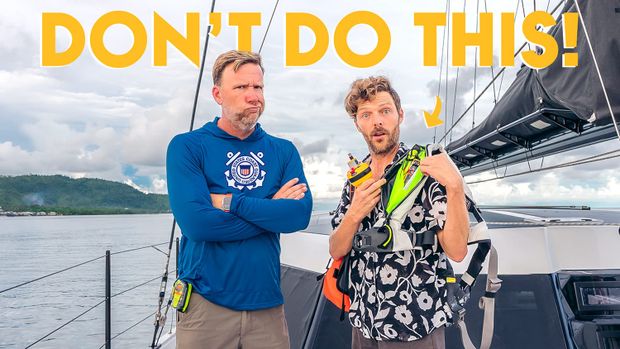
Luckily, we've had a couple of US Coast Guard Veterans on our passage from Cebu to Siargao Island. And while we've been showing them a slice of cruiser life, they have shared invaluable tips that could save us a lot of embarrassment, stress, pain and potentially our lives.
Coop has spent his entire professional career in the USCG and is a Search and Rescue Specialist. He shares some cautionary tales, busts some of the myths we've been told over the years, and gives us a couple of invaluable resources for world cruisers. Plus, this was just a really good excuse to evaluate our safety gear and procedures with a pro.
We have done our best to compile as much of the information as we could into this video and post. Because should any of us ever find ourselves in a situation at sea, we don't want to make any silly mistakes that could leave us stranded.
My hope is that emergency beacon users understand that a properly powered, registered and readily accessible EPIRB or PLB could be the difference between life and death in a maritime distress situation. There is no substitute. Have confidence that your closest Rescue Coordination Center will find someone to come rescue you. It might take a while, so hang in there. Someone will be coming. - Kevin "Coop" Cooper
Biggest Takeaways
- You can contact the coast guard about almost anything.
- They operate rescue co-ordination centers that cover much of the world. These SAR locations can coordinate help from any available source be it advice from a medical professional, fuel or a tow from Good Samaritan nearby, a commercial operator or the coast guard themselves.
- Don't wait until the situation becomes dire.
- Contact the coast guard as soon as you have a situation you are concerned about. At a minimum they can keep an eye on you and check in to make sure nothing has escalated.
- Know who to call…because location matters.
- There are search and rescue centers all over the world, managed by all types of authorities. It's good to have a phone number and email address at the ready for both your home port and the hubs along your intended route. Here are two websites that are super easy to use so you can locate the best SAR center
Find Rescue Coordination Centers Worldwide
- Global Sar Hub: globalsarhub.com/sea-sar
- Search And Rescue Contacts: sarcontacts.info
Understanding Rescue Protocols
Knowing how to signal for help and knowing what to expect can make an emergency situation far less scary and intimidating. It can also help expedite rescue efforts. Both of these websites are fantastic resources.
- US Coast Guard’s Boating Safety: uscgboating.org
- International Maritime Organization (IMO): imo.org
Emergency Location Beacons
There are several brands and options out there. But, here are the ones we've chosen. We chose a simple EPIRB since we have the top of the line PLBs integrated into our life jackets.
- EPIRB: amzn.to/4gRa760
- PLB + GPS + AIS (these go inside our life jackets): amzn.to/3ZJkPoZ
Information we provide when registering our beacon.
When registering, there is an option to provide specific details and a link. In a search and rescue situation, we want to provide them with as much helpful information as possible. And visuals are incredibly helpful. So, we write out the basics in the registration description, but we include a link to a cloud file that includes documents with full descriptions and photos of:
- Vessel
- Tender
- Paddle Boards
- Safety gear on board
- All Crew members & their emergency contacts
- Our Next of Kin and Important Contacts
- Our Tracking Map
Lifejacket
Not all lifejackets are created equal, not all are meant for offshore, and not all of them are designed for a PLB+AIS device. This is one piece of equipment as ocean crossing sailors we don't compromise on: amzn.to/47S96q8
Other Offshore Safety Gear
There's lots more to consider like life raft, flares, medical kits, go-bags, inflatable markers, etc... But that's a subject for another video and post. So if that's something you are interested in, please let us know.
Did We Forget Something?
If you know of a resource we should add or an important piece of information we're missing here, please let us know! Because as Coop said, it's all about helping each other be better mariners.